
How FlutterGo Plans, Generates, Analyzes and Repairs Flutter Code
Explore FlutterGo's autonomous AI engineering loop, detailing how the platform plans architecture, generates Dart code, analyzes stack traces, and self-heals bugs.
⚡ Featured Snippet Direct Answer: The FlutterGo AI Engineering LoopFlutter Gooperates through an advanced autonomous engineering loop that begins with architecture planning from natural language prompts, transitions into clean Dart code synthesis, and utilizes continuous stack trace analysis for self-healing error correction before deploying production builds
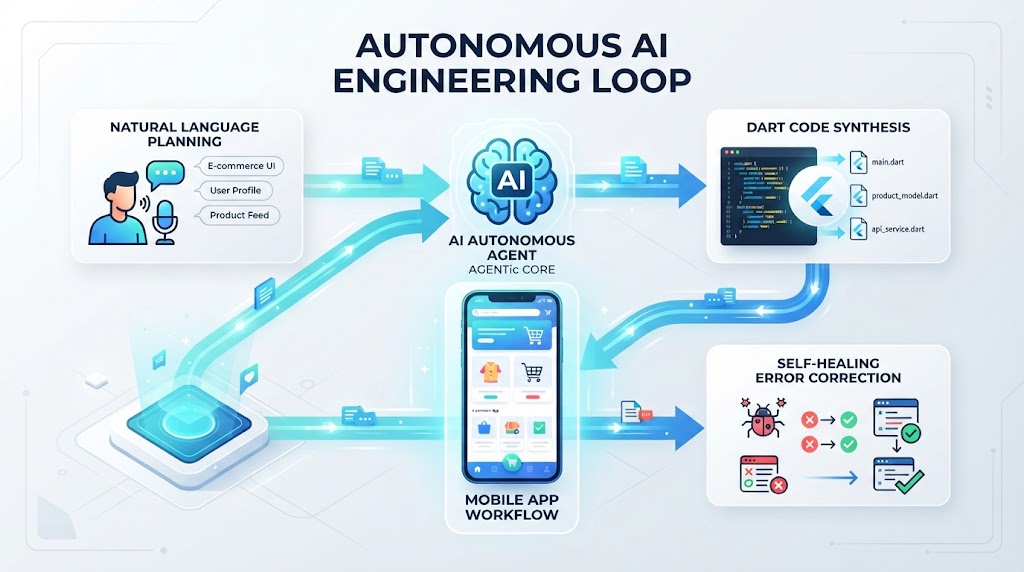
1. The Architecture Planning Phase
Every reliable mobile application requires a solid structural foundation before a single line of code is written.
- The system parses natural language user prompts to break down product concepts into structured functional requirements.
- It maps out complete user flows, database models, and UI component blueprints before initiating code generation.
2. Autonomous Code Synthesis
Once the planning blueprint is verified, the system moves directly into code creation.
2.1 Building Structured Directory Trees
Autonomous agents construct complete, production-grade directory trees systematically.
2.2 Material 3 and Riverpod Integration
The platform writes clean, typed Dart code structured tightly around Material 3 design tokens and Riverpod state management patterns.
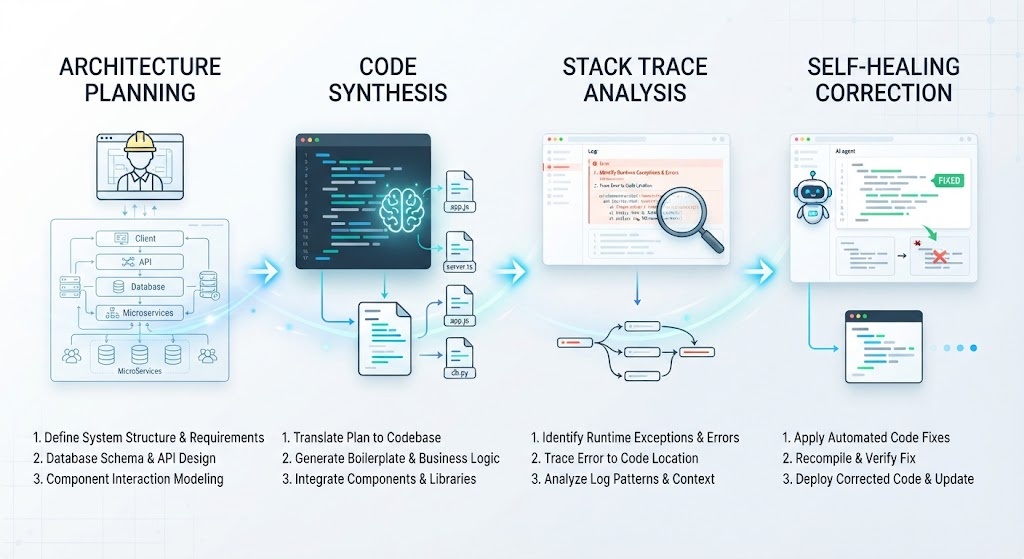
Engineering Loop Stage | Core System Operation | Developer Advantage |
|---|---|---|
Architecture Planning | Parsing prompts into blueprints & user flows | Structured mobile foundation from day one |
Code Synthesis | Generating typed Dart and Riverpod files | Production-ready project initialization |
Stack Trace Analysis | Inspecting compilation errors & conflicts | Automated identification of logic bugs |
Self-Healing Correction | Patching errors and verifying integrity | Zero manual debugging overhead |
3. Stack Trace Analysis and Error Detection
Even advanced AI models can encounter dependency mismatches or lint conflicts during compilation.
Instead of crashing or throwing errors back to the user, the engine intercepts compiler logs and performs deep stack trace analysis. It pinpoints the exact line of logic causing the conflict without requiring human intervention.
4. Self-Healing Error Correction Loops
Once a bug or syntax error is isolated, the autonomous agents initiate self-healing routines.
- The system independently applies targeted code patches to resolve the underlying conflict.
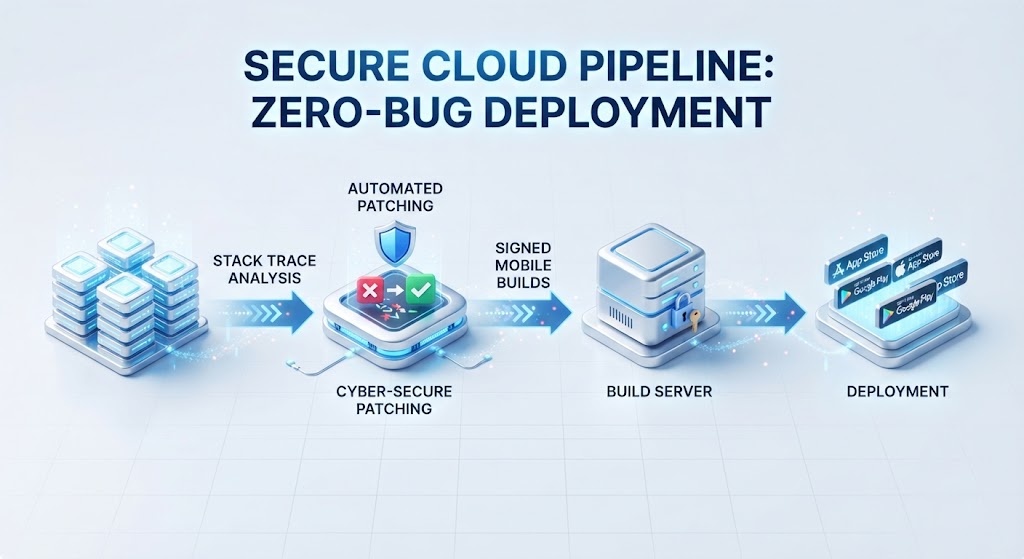
- It runs automated validation loops to verify integrity before passing the build to live previews or GitHub Sync Integration.
5. Conclusion: Resilient AI Code Generation
By combining intelligent architecture planning, autonomous code synthesis, and self-healing error correction, FlutterGo delivers a reliable engineering loop for mobile creation. Check out the Flutter Go Pricing Page to select the right tier for your team, or Visit Flutter Go today to experience autonomous app building firsthand.