
App Store Review: The Eight Rejections We See Most
Navigate Apple's review process with confidence. Explore the top app store rejection reasons flutter developers encounter and master actionable strategies to achieve first-time approval.
Deploying a cross-platform mobile application to the Apple App Store represents a major milestone for any engineering team. However, for Flutter developers, navigating the intricacies of Apple's App Store Review Guidelines can occasionally lead to unexpected hurdles. Receiving a rejection notice citing ambiguous rules like Guideline 2.1 or 4.2 can stall deployment timelines and drain engineering bandwidth.
To help your team ship smoothly, we have analyzed the most prevalent app store rejection reasons flutter applications encounter during evaluation and structured actionable steps to resolve them proactively.
1. Incomplete Information and Authentication Barriers (Guideline 2.1)
One of the leading triggers for review delays is the inability of the App Review team to access core application features due to restricted access or missing credentials.
Actionable Resolution
- Provide Active Test Credentials: Always supply fully functional, pre-provisioned demo user accounts within the App Store Connect review notes.
- Backend Readiness: Ensure that staging or production APIs are entirely stable and accessible externally during the evaluation window.
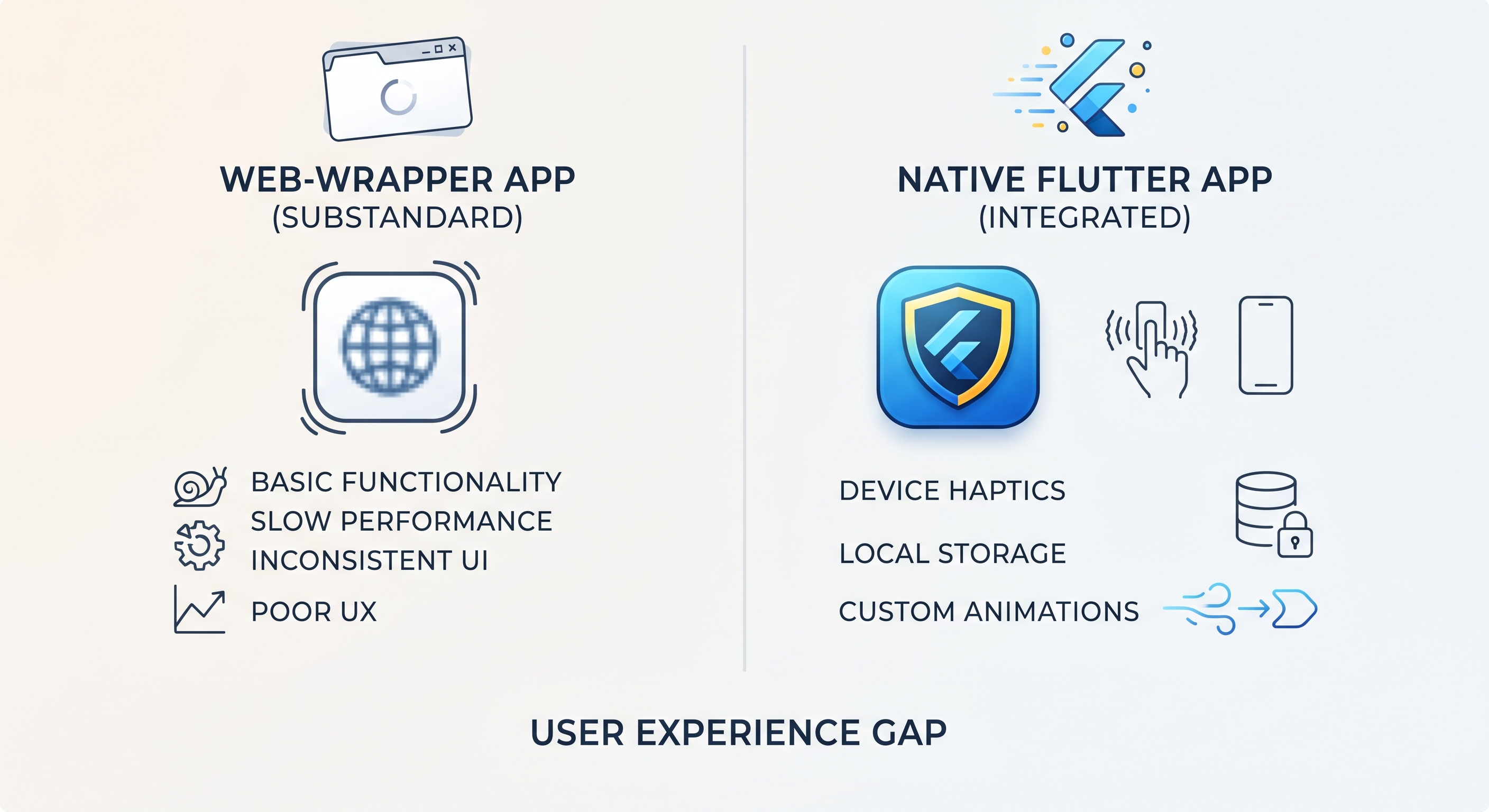
2. Insufficient Native Value and "Wrapper" Implementations (Guideline 4.2)
Apple maintains rigorous quality benchmarks regarding user experience, explicitly discouraging lightweight web wrappers or generic template shells disguised as standalone applications.
Elevating Native Integration
Ensure your Flutter build leverages platform-specific device capabilities—such as haptics, native push notifications, local SQLite storage, or custom platform channels. Utilizing advanced development tools likeFlutterGo AIensures your architecture incorporates robust, production-ready patterns natively.
3. Omitted Privacy Disclosures and Data Governance (Guideline 5.1.1)
Data transparency is a core pillar of the iOS ecosystem. If your application gathers user telemetry, crash reports, authentication details, or third-party analytics, a transparent privacy policy must be explicitly linked both within the app settings and on your App Store product page.
4. Unhandled Runtime Exceptions and Critical Crashes (Guideline 2.1)
An application that crashes immediately upon launch or during basic navigation will face immediate rejection without code-level troubleshooting from Apple's side.
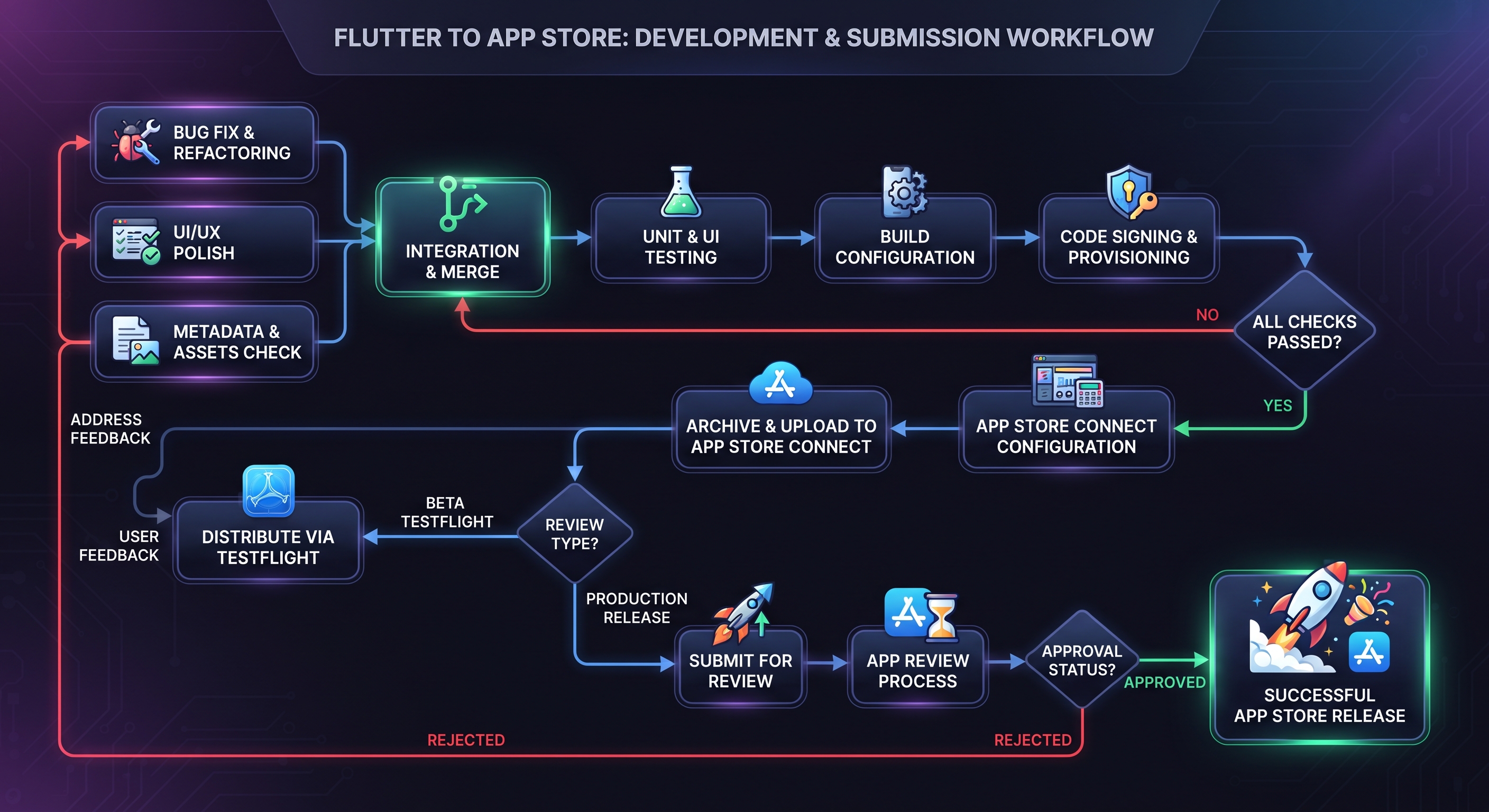
Conduct rigorous integration testing across physical iOS hardware devices and cloud testing grids likeBitriseorCodemagicbefore submitting your build viaApp Store Connect.
5. Discrepancies in App Metadata and Visual Assets (Guideline 2.3)
Your store listing metadata—including promotional descriptions, keywords, localized text, and screenshots—must accurately reflect the active state of the build. Advertising upcoming features or displaying unreleased UI screens frequently violates review parameters.
6. Non-Compliance with Sign in with Apple Mandates (Guideline 4.8)
If your application integrates third-party authentication providers (such as Google, GitHub, or social logins), Apple policy strictly requires implementing "Sign in with Apple" as an equivalent or primary authentication option.
7. In-App Purchase and Monetization Policy Violations (Guideline 3.1.1)
Digital content, subscription tiers, and functional upgrades must exclusively utilize Apple's official In-App Purchase (IAP) infrastructure. Directing users to external payment gateways for digital assets within an iOS environment breaches core commercial policies.
8. Placeholder Content and Unfinished UI Elements (Guideline 2.2)
Submitting builds containing standard placeholder text (e.g., Lorem Ipsum), empty button states, or unfinished UI components signals a premature submission to the evaluation team. Verify that all localized strings and layout components are polished prior to release export.
H2: Conclusion: Streamlining Your iOS Release Cycle
By identifying and eliminating these compliance bottlenecks early in your development cycle, your engineering team can circumvent prolonged review iterations and achieve a seamless deployment to the global App Store.